1980sPreview — design coming soon
Design coming soon
hoodie
Boost, Oil, Volts
The warning lights you learned to ignore.
£60.00Coming soon
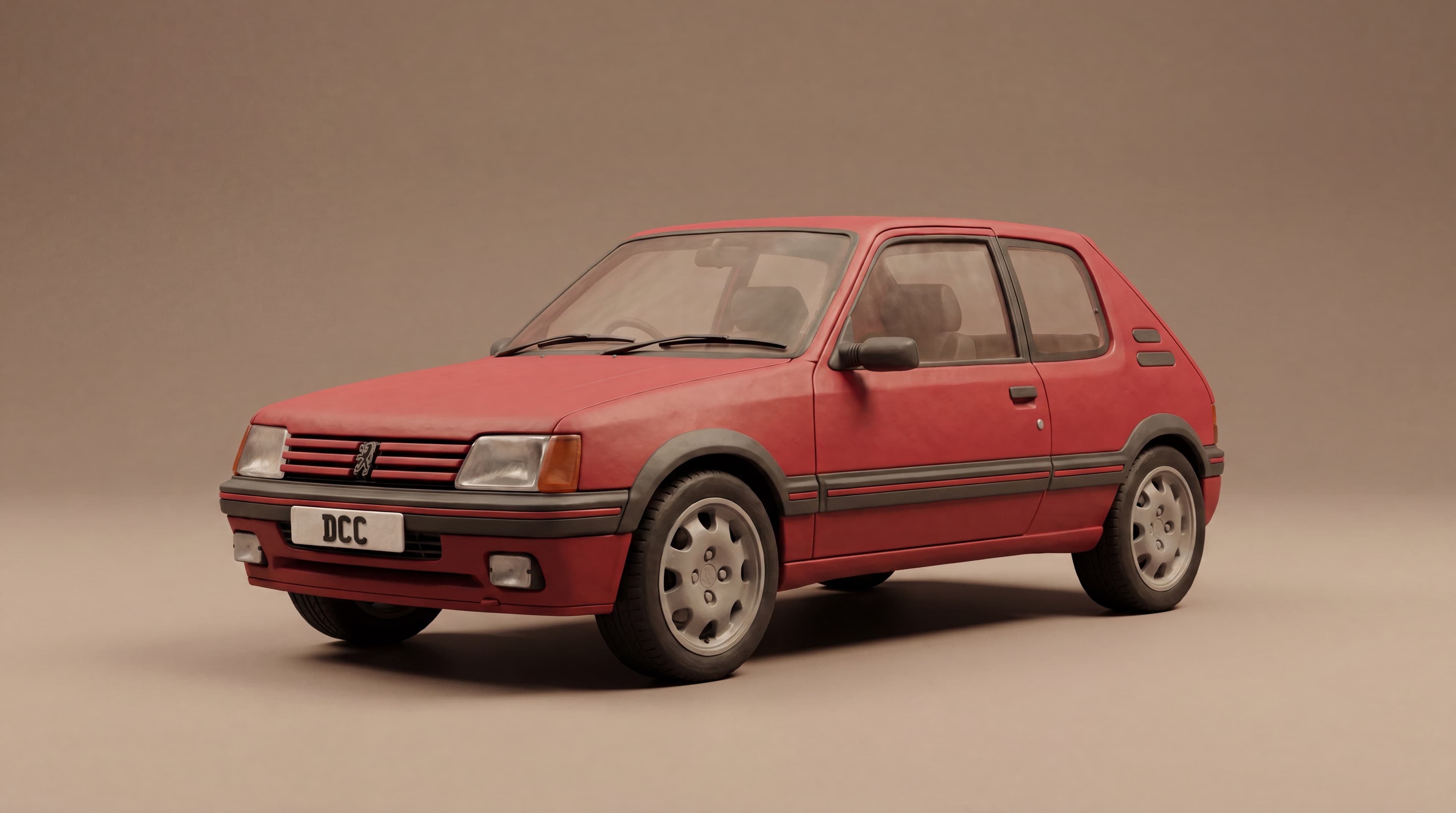
The hot hatch put a quick car on every estate, and a turbo badge on the boot meant you’d arrived. Sixteen valves, fuel injection, the suffixes that actually meant something — plastic bumpers, deep velour, and a digital dash that thought it was the future.
The eighties democratised speed. The hot hatch, the turbo badge, and a generation that learned to drive on the promise of three letters on the tailgate.
The hatchback takes over — three doors, a folding seat, and fuel injection on the options list.
The rep’s chariot arrives. Fleet sales boom and every motorway services fills with company cars.
Turbocharging enters the mainstream. The boost gauge becomes the must-have dashboard accessory.
Seatbelt-wearing becomes compulsory — 31 January. The click that changed every journey.
The hot-hatch war heats up. Three letters on the tailgate are all you need.
The M25 completes — 29 October. London gets its orbital, and the country gets a new traffic jam.
Fuel injection replaces the carburettor for good. The suffix ‘i’ appears on every boot lid.
Homologation specials hit the road — whale tails, wide arches, and a poster on every bedroom wall.
The eighties democratised speed. You no longer needed a sports car to go quickly — you needed a three-door hatchback with the right three letters on the tailgate. XR, GTI, RS: a quick car for the price of an ordinary one, and a whole generation learned to drive on the promise of it.
Turbocharging was the thrill — laggy, a little dangerous, and all the better for it. Fuel injection became the suffix everyone wanted. The rep got a Cavalier with the sporty badge; the yuppie got something German; the kid in the bedroom got a poster of a whale-tailed Cosworth.
And here’s the quiet irony the scene loves now: they built these by the million, then ran them into the ground. The base-spec survivors are rarer today than cars from twenty years before — a Sierra is harder to find than a Morris Minor, despite outselling it many times over.
The everyday hatch ferried the country to work; the fast ones got it home the long way. Escorts, Fiestas and Cavaliers filled every car park, while the XR, the RS and a clutch of hot hatches turned the school run into a race nobody admitted to.
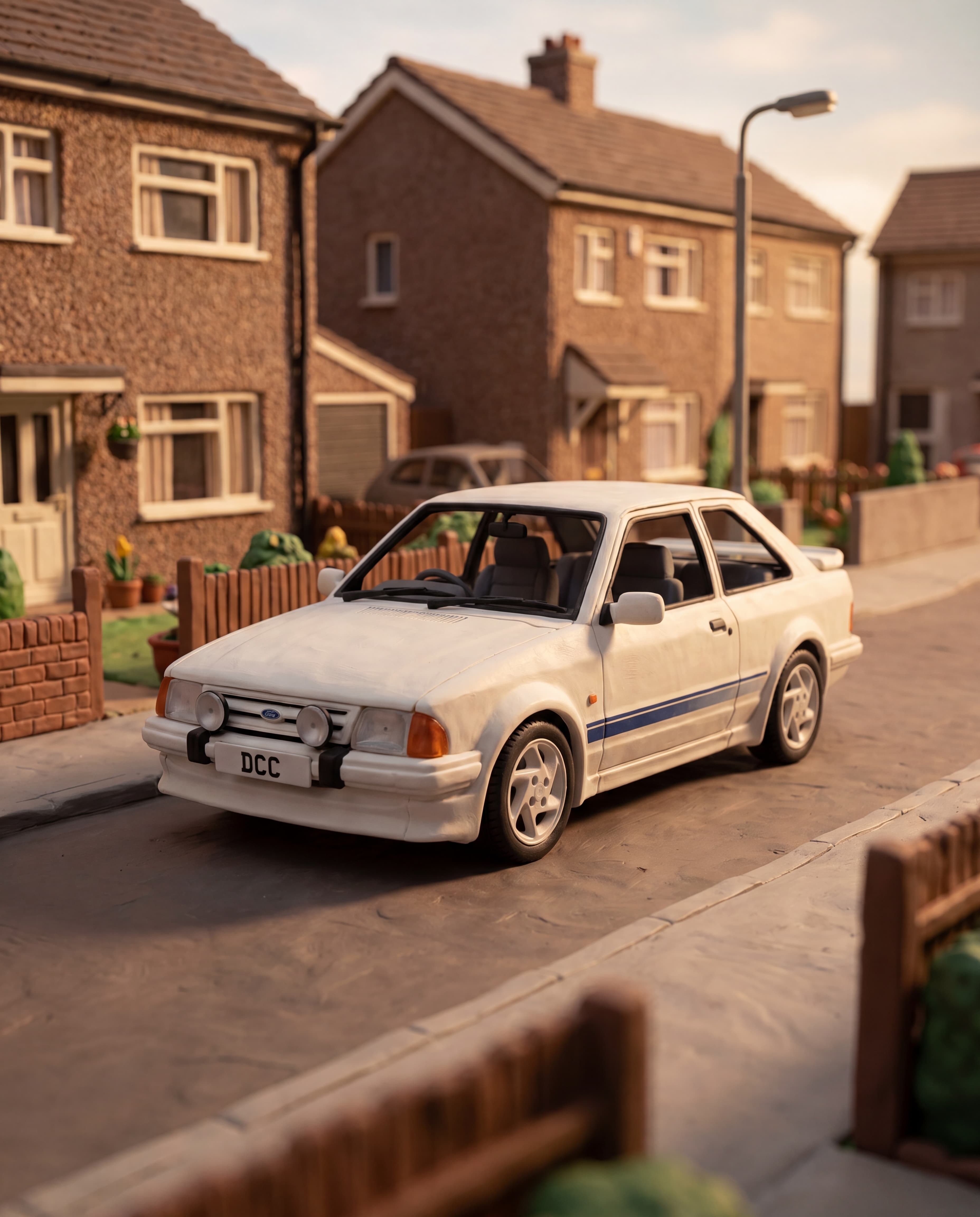
The fleet and family cars that were simply everywhere.
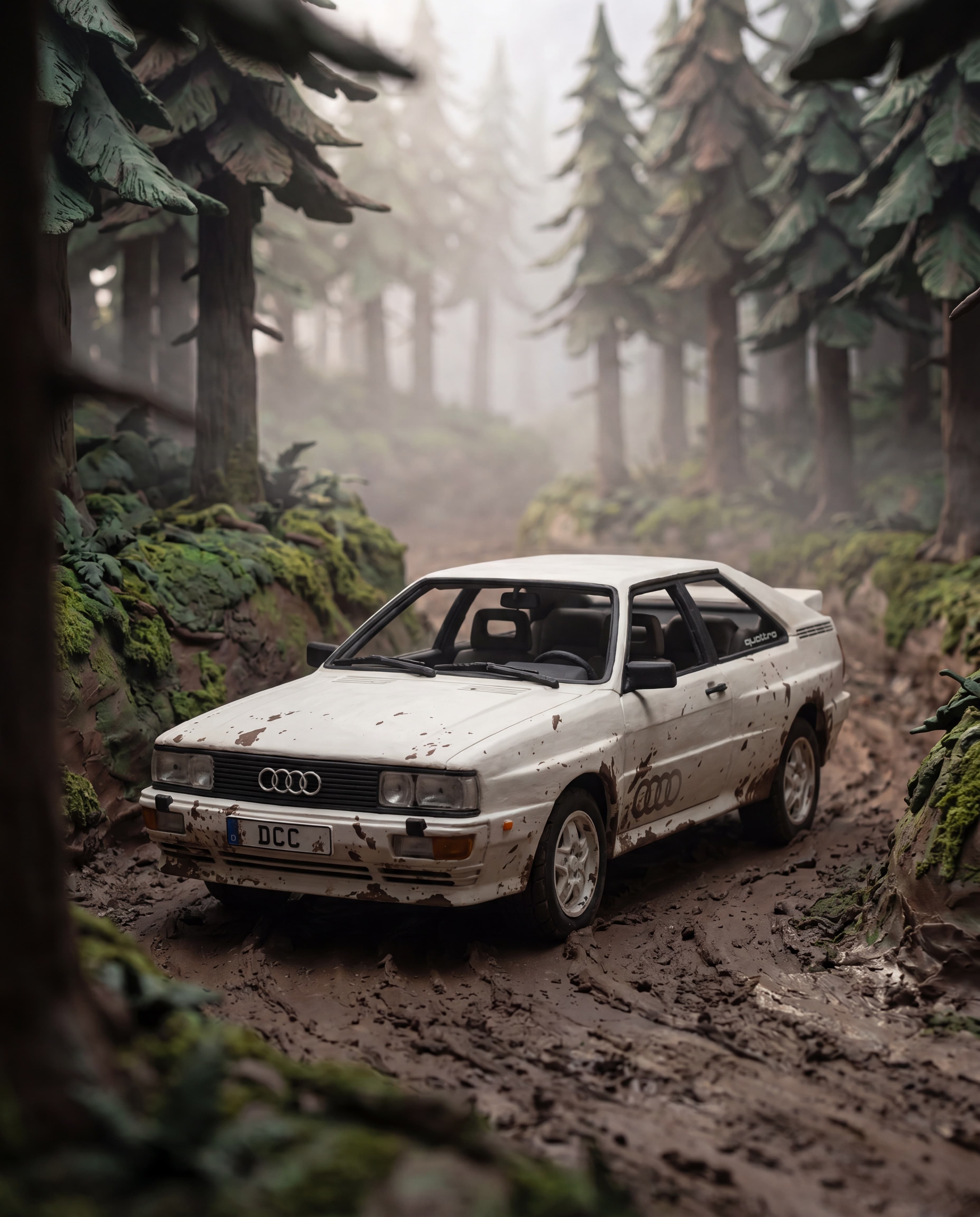
The hot hatches and homologation specials that made the posters.
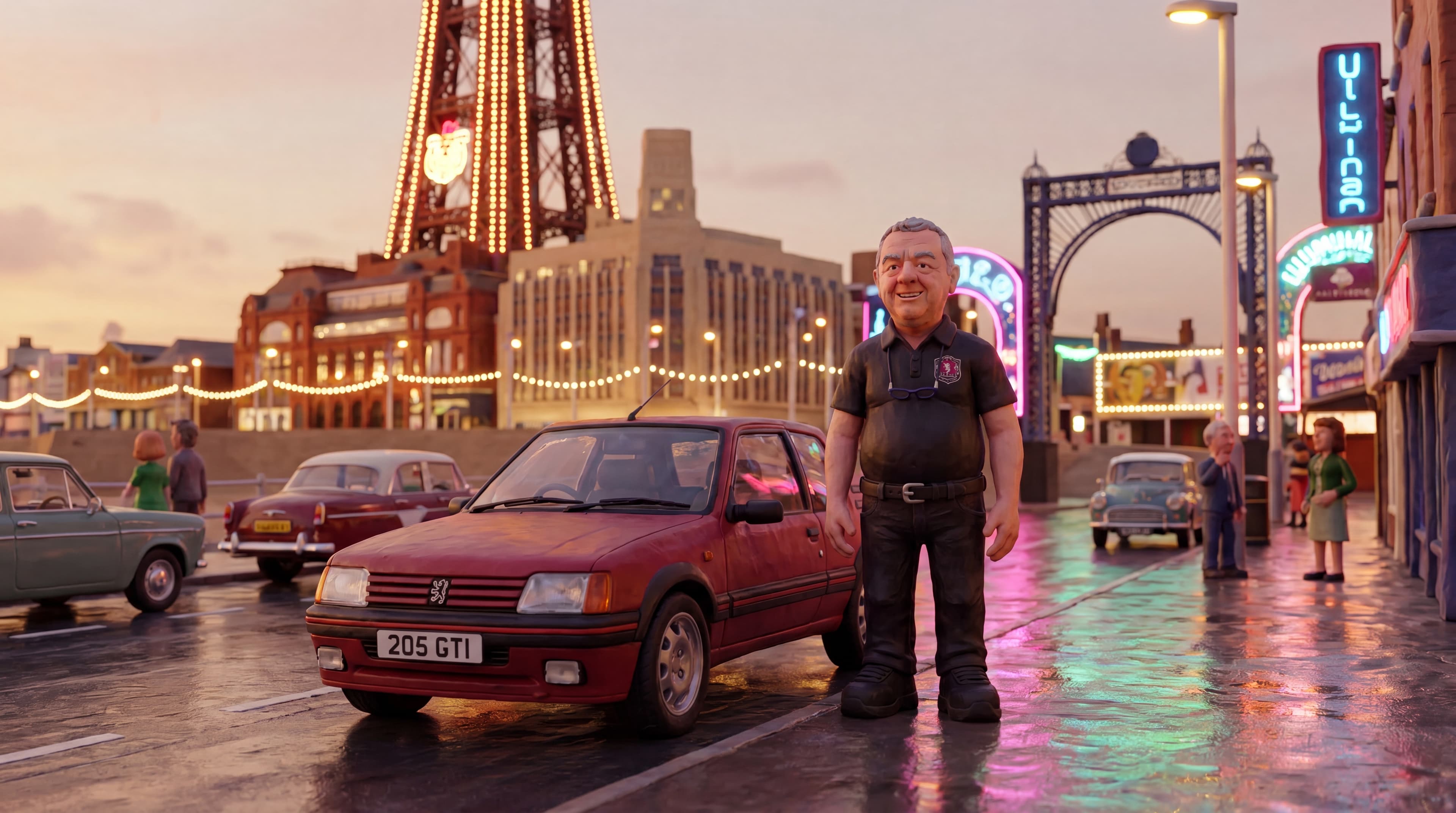
If the Seventies went to the seaside for the day, the Eighties went at night — and Blackpool switched the lights on for it. The Illuminations turned the front into miles of neon, and the promenade became a slow parade of everything that was quick: 205 GTis, XR3is, Golfs, all washed and lowered and rolling past the Tower with the windows down and the stereo up. The hot hatch was the car of the decade because it was the first fast car an ordinary lad could actually have, and Blackpool was where you took it to be seen. Nobody was going anywhere. That was the event. You cruised the front, clocked who'd done what to their motor, and pulled in for chips with the lights reflecting off your bonnet. Daft, brilliant, and gone too soon — like most good things.
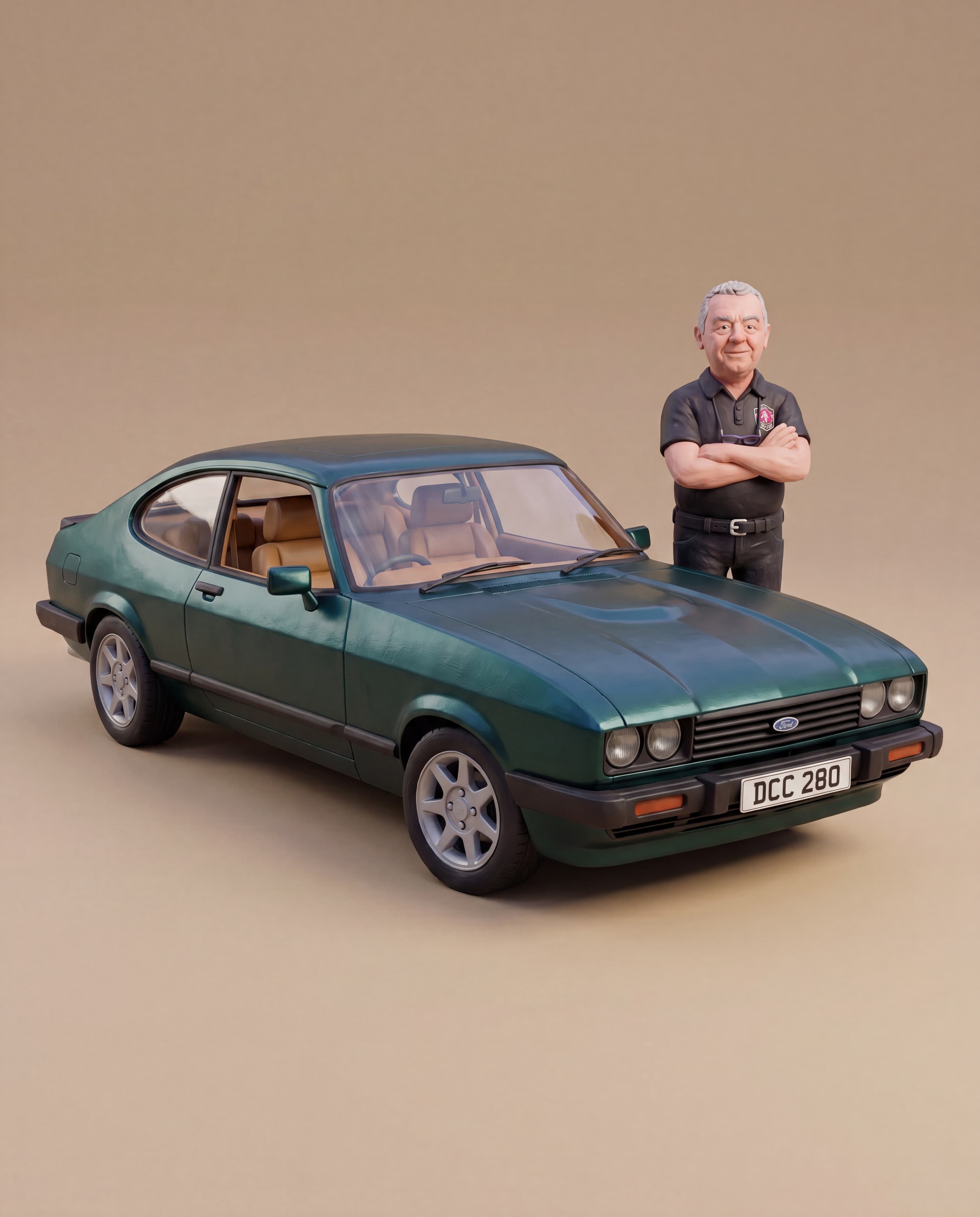
Recollections of a Brooklands 280
The deep Brooklands Green metallic 1987 Ford Capri 280 we have here is the absolute sunset of a legend. When the Capri finally finished production in '87, this special edition was the send-off — leather seats, limited-slip diff, and 15-inch alloy wheels. It was the end of a long line of working-class coupes.
I remember the mood in the late eighties. Everything was becoming terrace-casual knit jumpers and designer labels, and the Capri started to look like it belonged to a different age. But polishing one of these final 280 models in a clean studio set... it still holds its own. The sweeping fastback lines and that long nose have an unmistakable presence.
The eighties performance went mainstream, but the Capri was the old guard saying goodbye. A bucket of warm water, a high-quality polish, and some respect for a car that had kept Britain dreaming for nearly twenty years.

Peugeot 205 GTi
The 205 GTi is the one that proved the hot hatch wasn't a fad. A French firm came along, made something light and sharp and cheeky, and embarrassed cars costing three times as much. This is the 1.6 — the sweet one, before everyone argued about whether the 1.9 was better. It weighed nothing, the steering told you everything, and on the right road it'd put a grin on a vicar. In the Eighties every town had a few, usually red, usually polished to within an inch of their lives by a lad who couldn't quite afford the insurance but found a way. Crouch down to buff the wing of one and you remember why people fell for them. Daft, brilliant fun — and now, finally, the classic it always deserved to be.
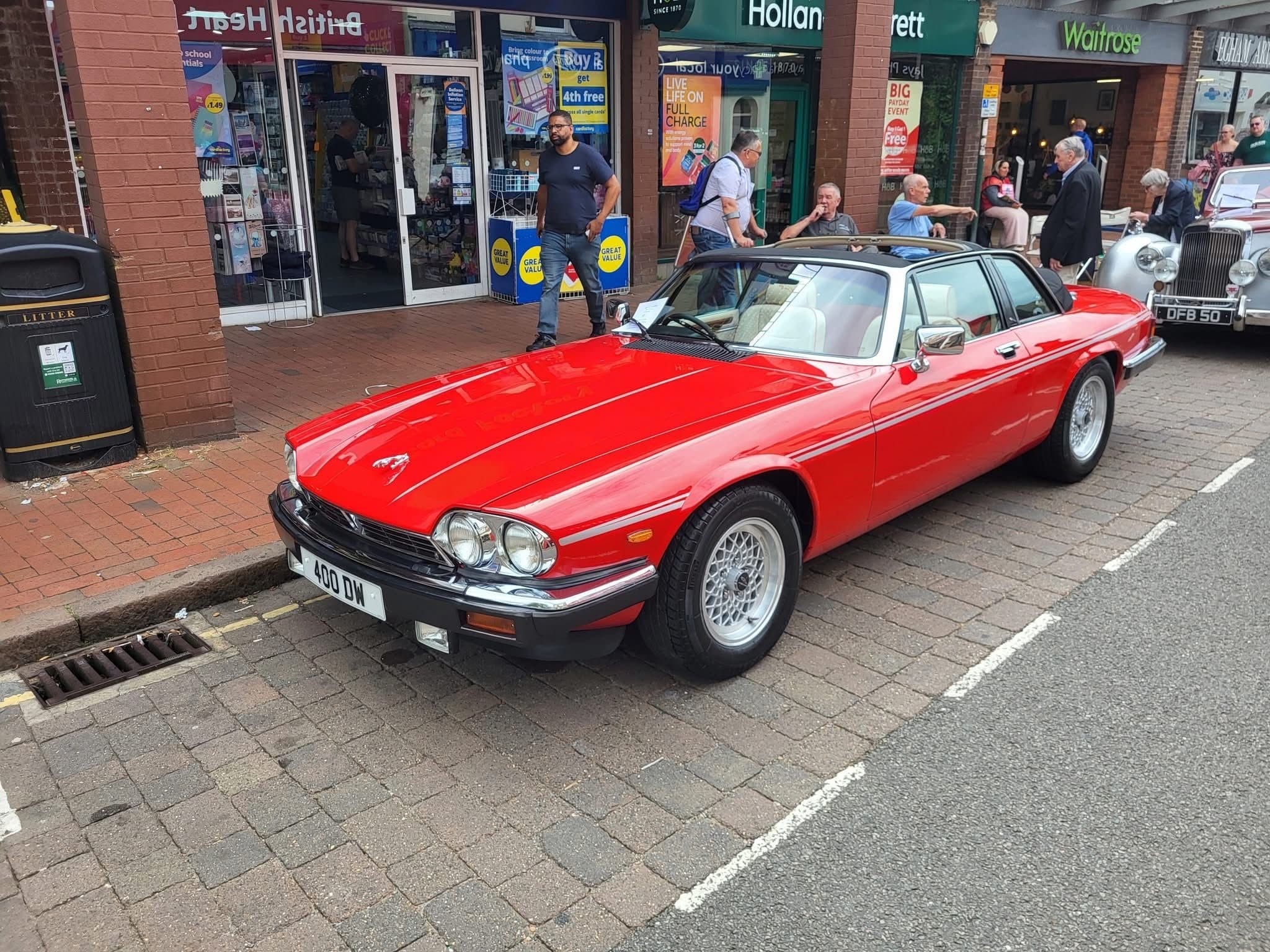
Dean’s own: a 1985 Jaguar XJS in red — the V12, now registered as a historic vehicle, photographed at the Egham show. Twelve cylinders’ worth of grand touring, kept the way Dean keeps everything — better than it left the factory.
A handful of eighties pieces — for the people who had the poster, not just the parka. More to come.
Design coming soon
hoodie
The warning lights you learned to ignore.
Design coming soon
sweater
Base trim, full heart.
Design coming soon
hoodie
Company-car royalty.
Design coming soon
sweater
Invented plate, period alloys.
Design coming soon
hoodie
Wait for it. Wait for it.
Design coming soon
sweater
Aero as a personality.
That’s the eighties — the decade speed got democratic. The nineties are next, and they’re only just old enough to call classic.