1990sBuild 01 / 02
Neon Car Meets
Escort Cosworth Night Meet
Part of the Neon Car Meets line, from Dean's Classic Cars.
T-Shirt£34.99

1990 to 1999
The cars off your teenage bedroom wall, finally old enough to count.
Race-bred kit escaped into ordinary cars, and the scene is falling for them hardest right now.
The Mk 5 Escort arrives: the rep’s runabout, the family car and, soon, the Cosworth on the rally stage.
The Jaguar XJ220 enters production. More than 210 mph and, until the McLaren F1, the fastest road car in the world.
Every new petrol car now needs a catalytic converter. Cleaner air, quieter exhausts.
The Mondeo is European Car of the Year. So ordinary it names a voter, and Britain’s new default saloon.
Colin McRae wins the World Rally Championship at twenty-seven, the youngest champion at the time. Blue car, gold wheels.
The Lotus Elise arrives. About 700 kg, aluminium tub, and a reminder that lightness wins.
The McLaren F1 clocks 240 mph. Central seat, gold-lined engine bay, still the benchmark.
The nineties were when race-bred kit escaped into ordinary cars. Four-wheel drive and turbocharging, the stuff that won world rally titles, turned up on the sort of car you could finance from a forecourt. Colin McRae won the championship at twenty-seven, the youngest champion at the time, and half of Britain decided it wanted a blue car with gold wheels.
The shapes went soft. Folded-paper wedges gave way to smooth “biodesign” curves, chrome gave way to body-colour bumpers, and the airbag, the catalytic converter and the CD player became standard kit.
It’s also the decade the scene is falling for hardest right now. The classic market for older cars has cooled, but nineties hot hatches and modern classics are the growth end, bought by the people who grew up with them, finally old enough and well-off enough to put one back on the drive. The honest survivors count as much as the heroes here. The scene loves both.
The everyman did the commuting; the heroes did the daydreaming. Fiestas, Escorts and Mondeos kept the motorways full, while the rally reps, the featherweight roadsters and one central-seat hypercar reminded everyone what Britain could still build.
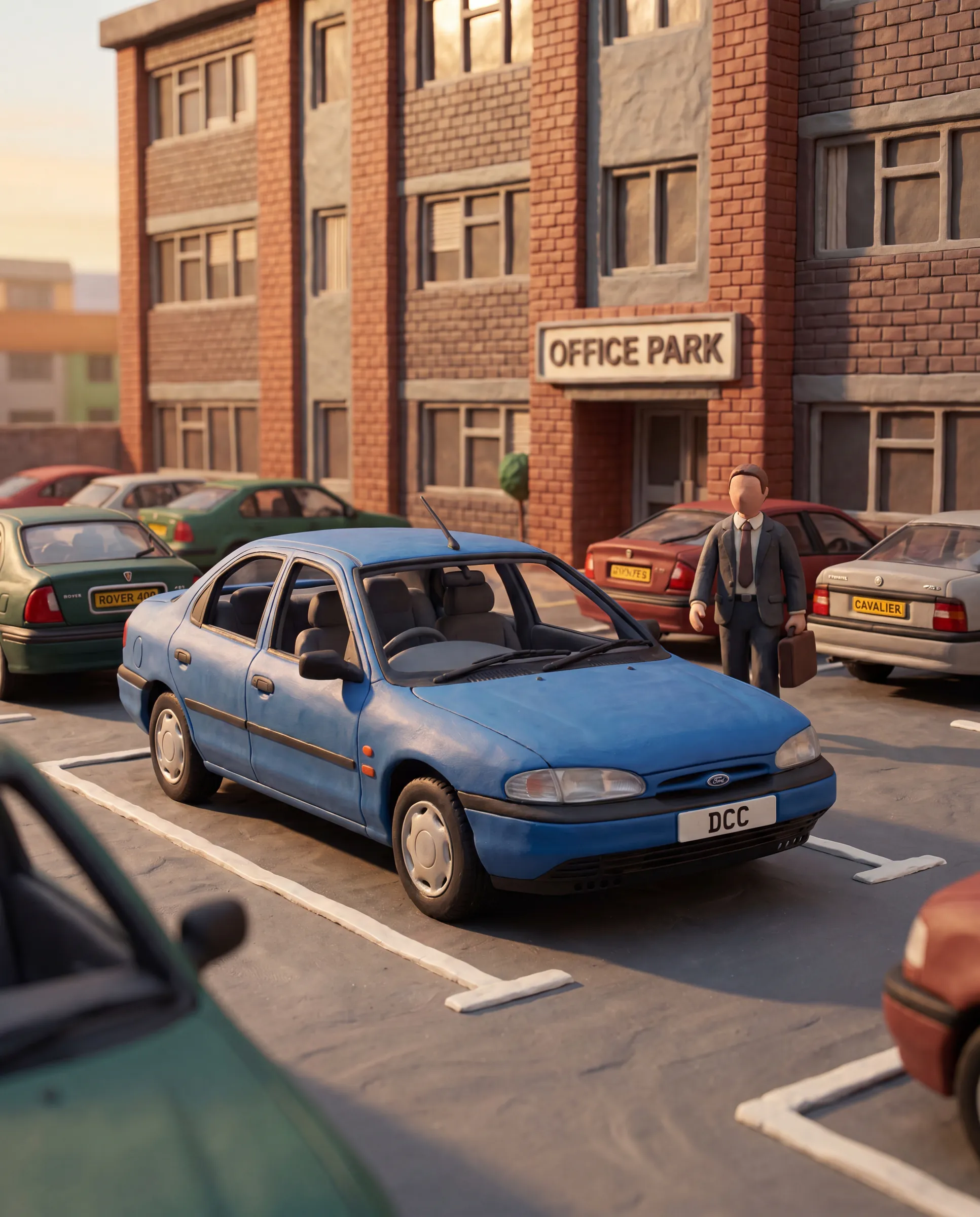
The superminis, saloons and reps that sold by the hundred thousand.
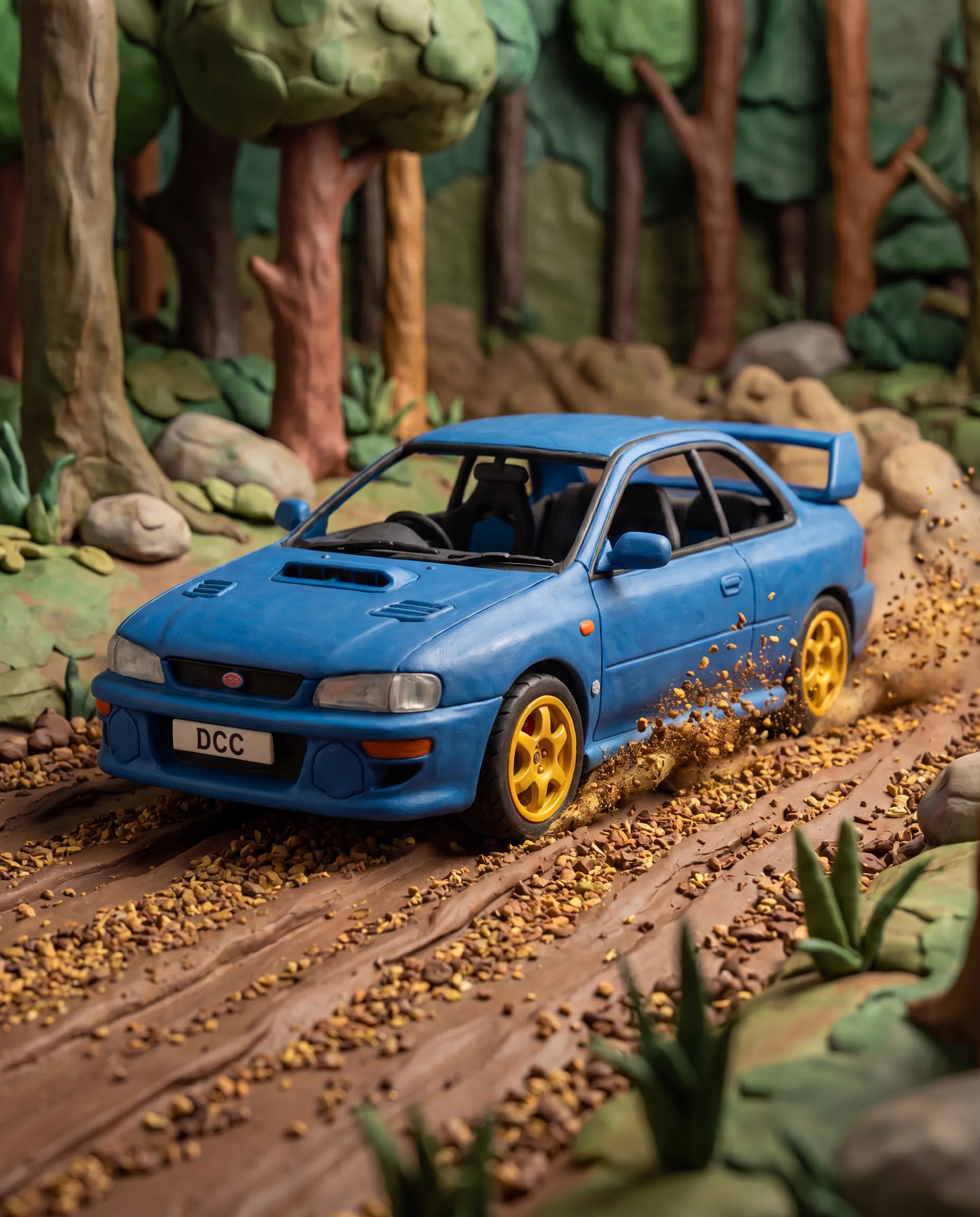
The rally specials, the lightweight roadsters and the supercars.
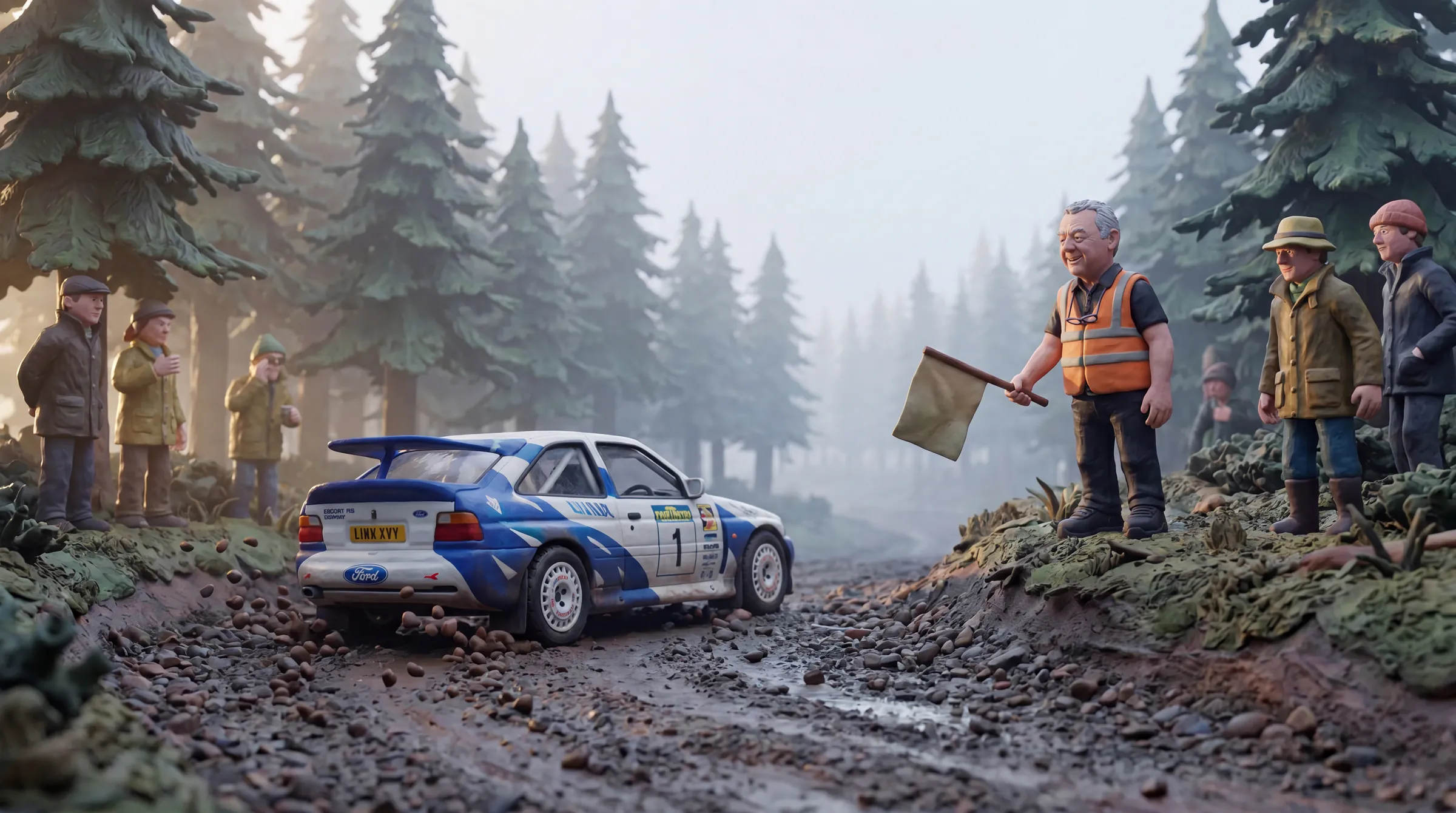
Kielder is the biggest man-made forest in England, and once a year in the Nineties it turned into the toughest test in rallying. The RAC Rally ran through those Northumberland stages in November: freezing, pitch dark by four, the sort of cold that gets into your boots and stays there. And we went anyway. Thousands of us, stood on a forest bank in the mist, waiting twenty minutes for ten seconds of a car. Then it'd arrive: an Escort Cosworth or an Impreza, lights blazing, sideways on the gravel, gone in a shower of stones and a noise you felt in your chest. That was the Nineties for me. Not a showroom or a circuit, but a wet forest at dawn with a flask and a torch, watching the best in the world work for it. Worth every frozen toe.
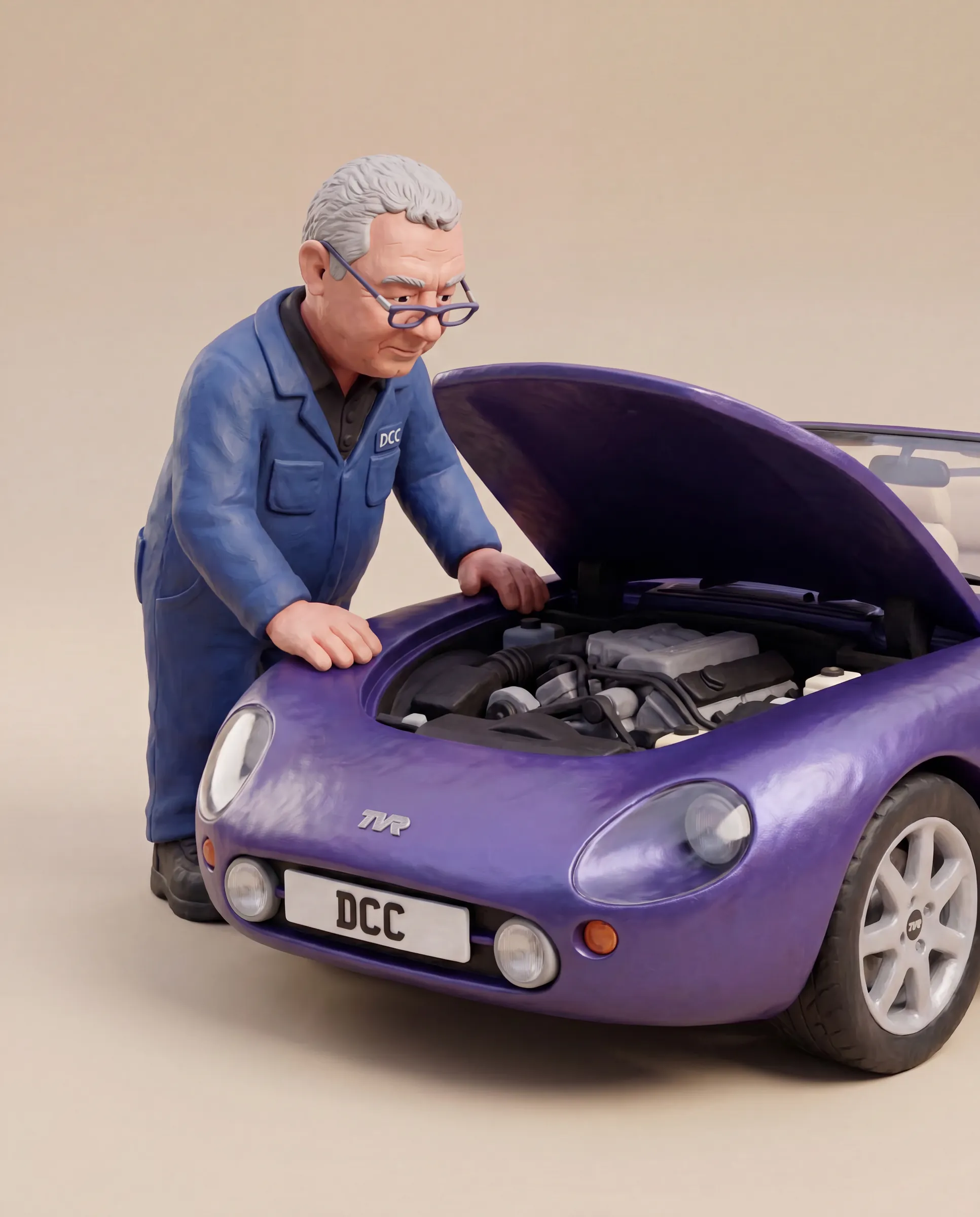
A TVR Griffith roadster
The metallic purple 1996 TVR Griffith Roadster is a piece of absolute British engineering theatre. No electronic driver aids, no ABS, no traction control. Just a fibreglass body, a massive V8 engine, and a driving experience that demanded your full, undivided attention.
Pop the bonnet and the engine bay is as beautiful as it is raw. Checking the ignition leads on one is slow work, reading glasses on, a lead at a time. One wrong move and you’d be tracing electrical gremlins for days.
By the nineties, biodesign curves had taken over, but TVR stayed wild. It was a reminder of what British motoring could be when it stopped trying to be sensible. A bit of grease, a lot of passion, and a car that felt completely alive.
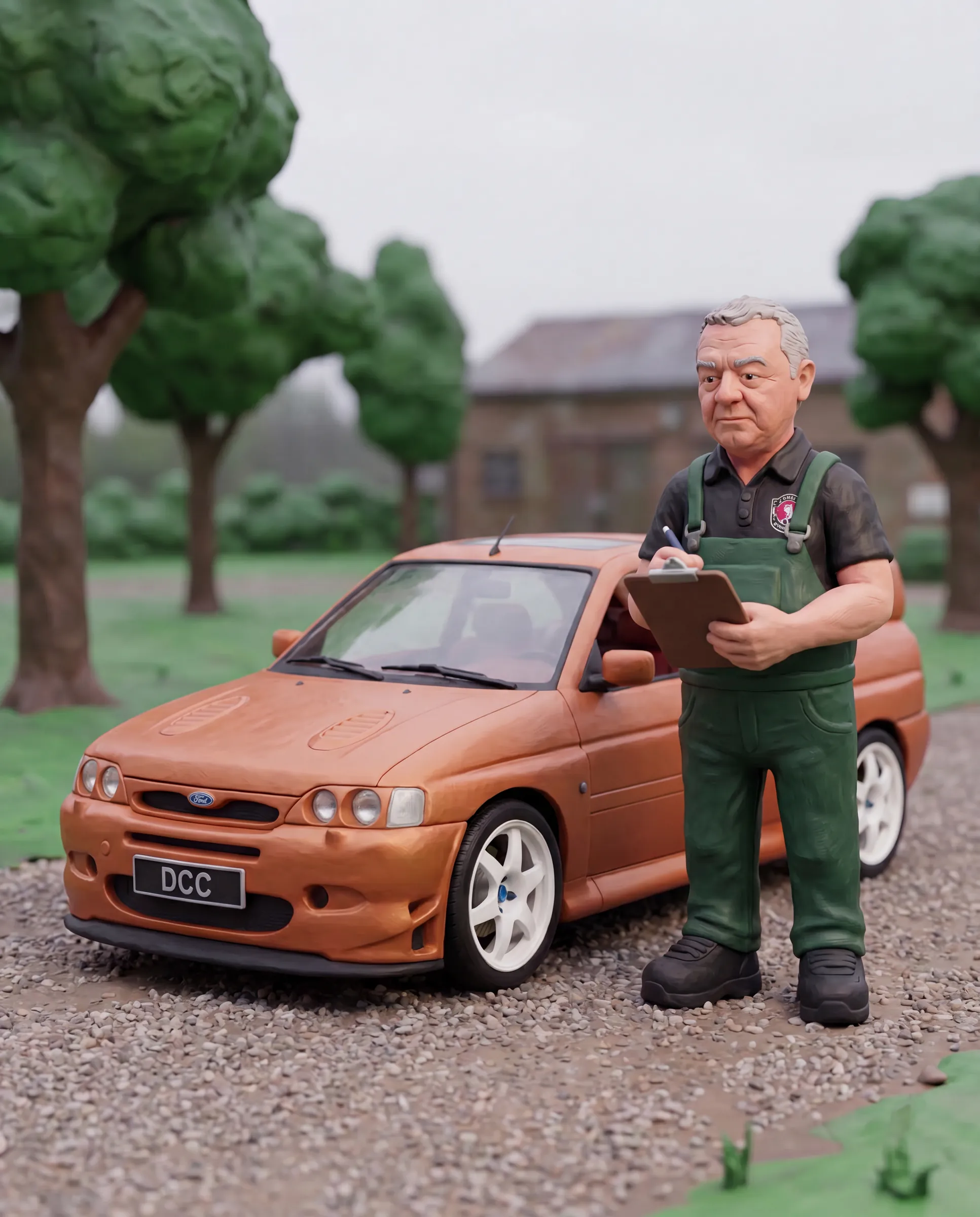
Ford Escort RS Cosworth
The Escort RS Cosworth is the Nineties in one car: a humble family hatch with a rally car hiding underneath and a rear wing you could serve dinner off. Ford built it to win, and it did: turbocharged, four-wheel drive, that enormous spoiler everyone laughed at until they saw one disappear up a forest stage. On the road it was a wolf in a Ford suit. The badge said school run, the boost said otherwise. I always give one a proper look-over before it goes anywhere; there's a lot going on under there, and these are worth real money now to the lads who had the poster. Clipboard out, glasses on, a slow walk round. Some cars you just want to get right. This is one of them.
Where to next?
Or stay in the 90s: its designs are just below.
Two designs from the nineties. Hoodie, two weights of sweatshirt, or a tee.
Neon Car Meets
Part of the Neon Car Meets line, from Dean's Classic Cars.

Neon Car Meets
Part of the Neon Car Meets line, from Dean's Classic Cars.
Buy opens our store, ricki-robin.store, in a new tab.
That’s five decades of British motoring, kept in the best possible order. The store’s through here. Find the one that was yours.